astro.wikisort.org - Star
SN 1000+0216 was an extremely remote superluminous supernova (SLSN), which occurred in between June and November 2006 in the constellation Sextans. Its peak far-ultraviolet absolute magnitude reached −21.5, which exceeded the total absolute magnitude of its host galaxy. The distance (redshift) to this supernova z=3.8993 ± 0.0074 makes it the most distant supernova observed as of 2012. The luminosity of SN 1000+0216 evolved slowly over several years as it was still detectable in November 2008. Both the high luminosity and slow decay indicate that the supernova's progenitor was a very massive star. The supernova explosion itself was likely either a pair-instability supernova or a pulsational pair-instability supernova similar to the SN 2007bi event. It also had some similarities to the low redshift SN 2006gy supernova. Overall classification of SN 1000+0216 remains uncertain.[2]
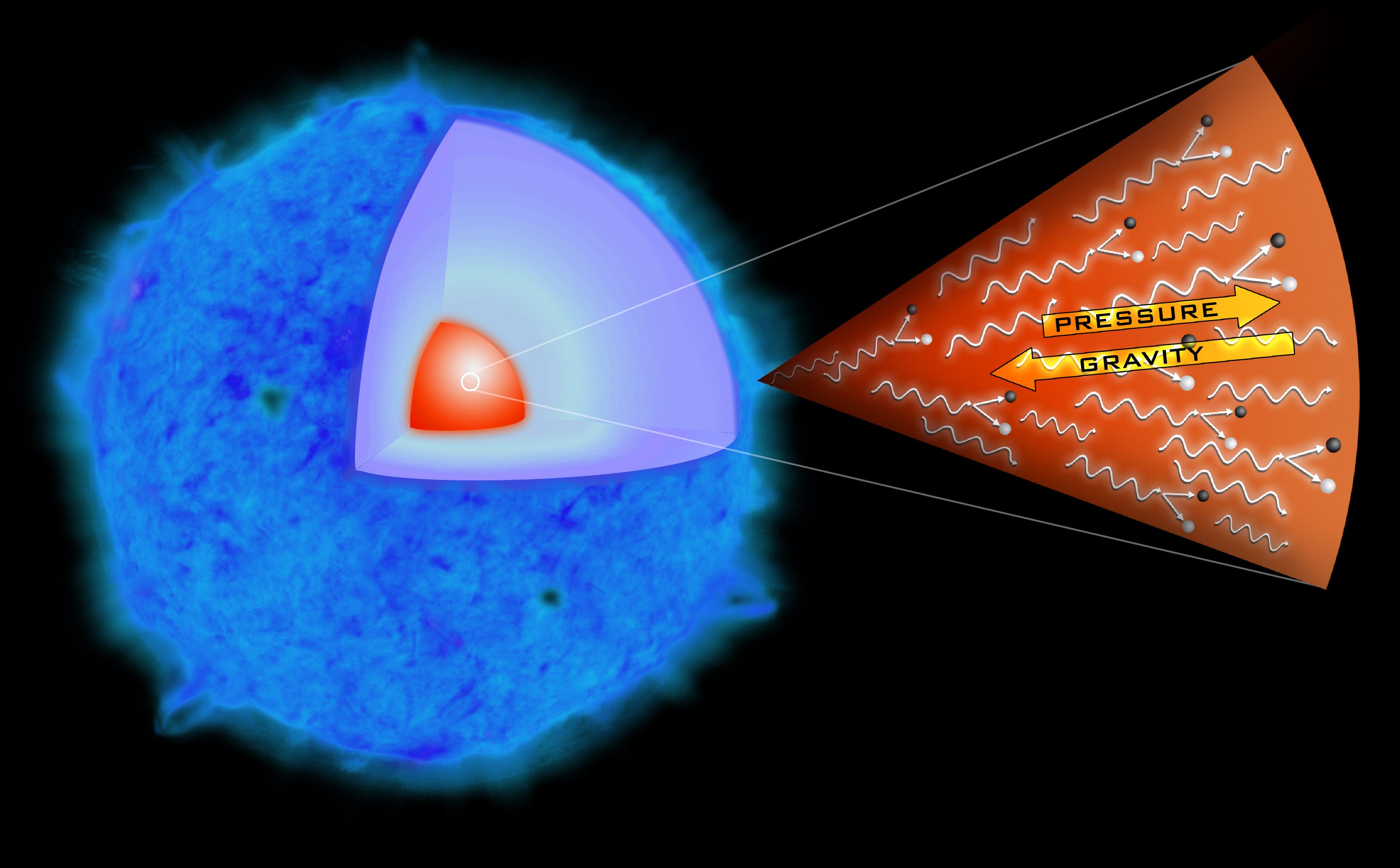 The pair instability process that triggered the explosion in SN 1000+0216 | |
| Event type | Supernova  |
|---|---|
| SLNS-R or SLNS-II ? | |
| Date | Supernova Legacy Survey |
| Constellation | Sextans |
| Right ascension | 10h 00m 05.8720s[1] |
| Declination | +02° 16′ 23.621″[1] |
| Epoch | J2000.0 |
| Distance | z=3.8993 ± 0.0074 |
| Redshift | 3.8993 ±0.0074 |
| Progenitor | initially a 140–250 M☉ star |
References
- "[CSG2012] SN J1000+0216". SIMBAD. Centre de données astronomiques de Strasbourg. Retrieved 2021-01-25.
- Cooke, J.; Sullivan, M.; Gal-Yam, A.; Barton, E. J.; Carlberg, R. G.; Ryan-Weber, E. V.; Horst, C.; Omori, Y.; Díaz, C. G. (2012). "Superluminous supernovae at redshifts of 2.05 and 3.90". Nature. 491 (7423): 228–231. arXiv:1211.2003. Bibcode:2012Natur.491..228C. doi:10.1038/nature11521. PMID 23123848. S2CID 4397580.
External links
- Light curves on the Open Supernova Catalog
- 12 Billion-Year Old Supernova Discovered by Astronomers
- Elemental origins glimpsed in 12 billion year old supernova
| Classes |   | |
|---|---|---|
| Physics of |
| |
| Related |
| |
| Progenitors |
| |
| Remnants |
| |
| Discovery | ||
| Lists |
| |
| Notable |
| |
| Research |
| |
| ||


 | This variable star–related article is a stub. You can help Wikipedia by expanding it. |
На других языках
- [en] SN 1000+0216
[ru] SN 1000+0216
SN 1000+0216 — чрезвычайно удалённая гиперновая звезда, которая наблюдалась в период с июня по ноябрь 2006 года. Её максимальная абсолютная величина ультрафиолетового излучения достигла -21,5, что превысило полную абсолютную величину её галактики-хозяина. Красное смещение этой сверхновой z = 3,8993 ± 0,0074 делает её самой удалённой сверхновой, наблюдаемой по состоянию на 2012 год. Светимость SN 1000 + 0216 медленно (ниже, чем обычно при взрывах сверхновых звёзд) менялась в течение нескольких лет, её следы всё ещё обнаруживались в ноябре 2008 года. Высокая светимость и медленный её спад указывают на то, что предшественницей сверхновой была очень массивная звезда. Сама сверхновая была, вероятно, парно-нестабильной, подобной событию SN 2007bi. Она также имела некоторое сходство со сверхновой SN 2006gy. Общая классификация SN 1000+0216 остаётся неопределённой[1].Другой контент может иметь иную лицензию. Перед использованием материалов сайта WikiSort.org внимательно изучите правила лицензирования конкретных элементов наполнения сайта.
WikiSort.org - проект по пересортировке и дополнению контента Википедии