astro.wikisort.org - Star
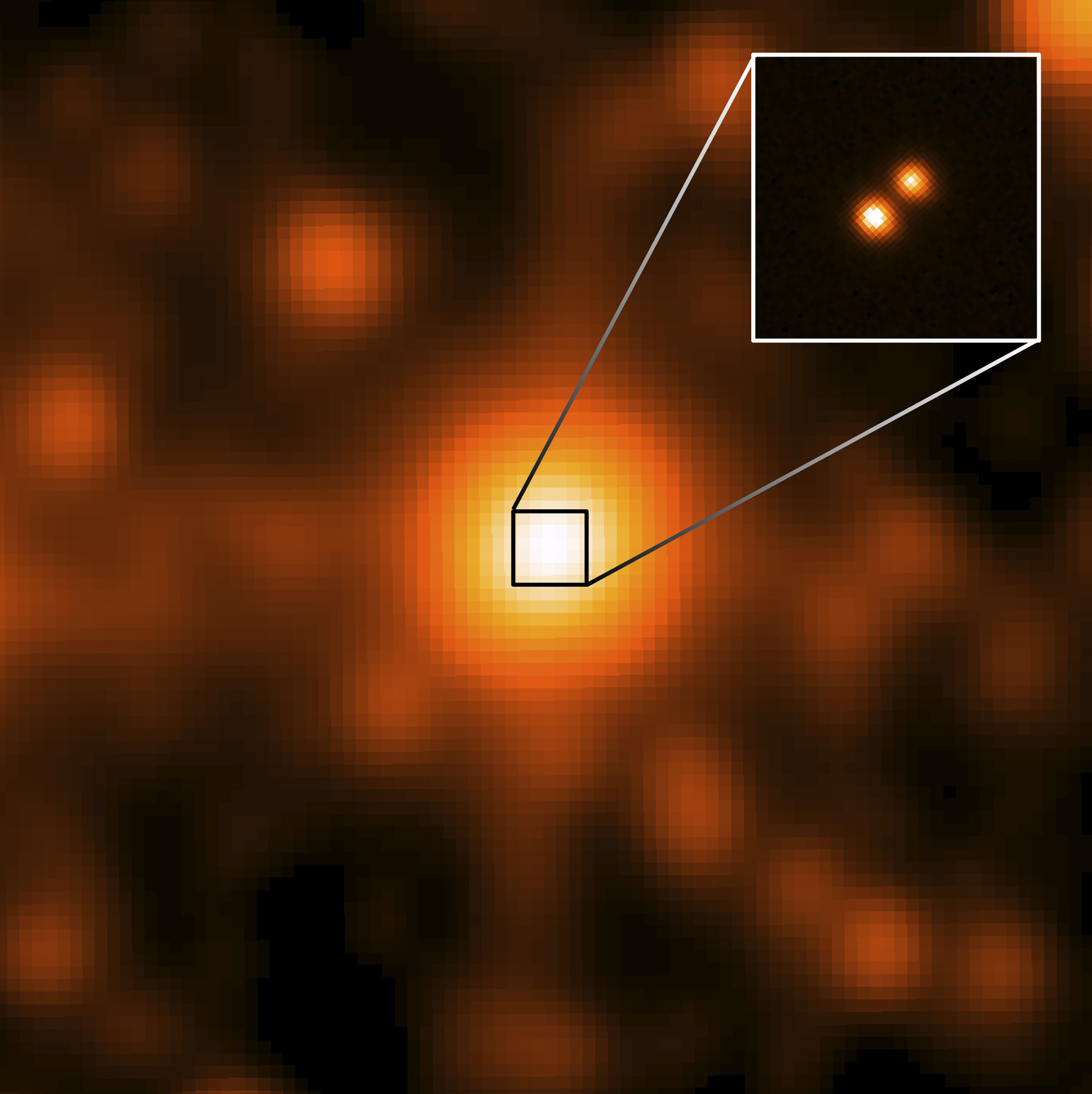
Kepler-66 is a star with slightly more mass than the Sun in the NGC 6811 open cluster in the Cygnus constellation. It has one confirmed planet, slightly smaller than Neptune, announced in 2013.
| Observation data Epoch J2000 Equinox J2000 | |
|---|---|
| Constellation | Cygnus |
| Right ascension | 19h 35m 55.5743s[1] |
| Declination | +46° 41′ 15.957″[1] |
| Apparent magnitude (V) | 15.3 |
| Characteristics | |
| Spectral type | G0V |
| Astrometry | |
| Proper motion (μ) | RA: −3.443±0.049[1] mas/yr Dec.: −8.784±0.045[1] mas/yr |
| Parallax (π) | 0.8030 ± 0.0256 mas[1] |
| Distance | 4,100 ± 100 ly (1,250 ± 40 pc) |
| Details | |
| Mass | 1.038 ± 0.044 M☉ |
| Radius | 0.966 ± 0.042 R☉ |
| Temperature | 5962 ± 79 K |
| Metallicity [Fe/H] | 0.012 ± 0.003 dex |
| Rotation | 10.527±0.011 days[2] |
| Age | 1 ± 0.17 Gyr |
| Other designations | |
| Database references | |
| SIMBAD | data |
| Extrasolar Planets Encyclopaedia | data |
Planetary system
| Companion (in order from star) |
Mass | Semimajor axis (AU) |
Orbital period (days) |
Eccentricity | Inclination | Radius |
|---|---|---|---|---|---|---|
| b | 0.31 MJ | 0.1352 | 17.815815 | — | — | 2.80 R🜨 |
References
- Brown, A. G. A.; et al. (Gaia collaboration) (August 2018). "Gaia Data Release 2: Summary of the contents and survey properties". Astronomy & Astrophysics. 616. A1. arXiv:1804.09365. Bibcode:2018A&A...616A...1G. doi:10.1051/0004-6361/201833051. Gaia DR2 record for this source at VizieR.
- McQuillan, A.; Mazeh, T.; Aigrain, S. (2013). "Stellar Rotation Periods of The Kepler objects of Interest: A Dearth of Close-In Planets Around Fast Rotators". The Astrophysical Journal Letters. 775 (1). L11. arXiv:1308.1845. Bibcode:2013ApJ...775L..11M. doi:10.1088/2041-8205/775/1/L11. S2CID 118557681.
- "KOI-1958". SIMBAD. Centre de données astronomiques de Strasbourg. Retrieved 14 February 2018.
External links
2013 in space | ||||||
|---|---|---|---|---|---|---|
| ||||||
Space probe launches  |
|    | ||||
| Impact events | ||||||
| Selected NEOs | ||||||
| Exoplanets |
| |||||
| Discoveries |
| |||||
| Novae | ||||||
| Comets |
| |||||
| Space exploration |
| |||||
| ||||||


На других языках
- [en] Kepler-66
[ru] Kepler-66
Kepler-66 — звезда, которая находится в созвездии Лебедь на расстоянии около 3610 световых лет от нас. Она принадлежит рассеянному скоплению NGC 6811. Вокруг звезды обращается, как минимум, одна планета.Текст в блоке "Читать" взят с сайта "Википедия" и доступен по лицензии Creative Commons Attribution-ShareAlike; в отдельных случаях могут действовать дополнительные условия.
Другой контент может иметь иную лицензию. Перед использованием материалов сайта WikiSort.org внимательно изучите правила лицензирования конкретных элементов наполнения сайта.
Другой контент может иметь иную лицензию. Перед использованием материалов сайта WikiSort.org внимательно изучите правила лицензирования конкретных элементов наполнения сайта.
2019-2026
WikiSort.org - проект по пересортировке и дополнению контента Википедии
WikiSort.org - проект по пересортировке и дополнению контента Википедии